
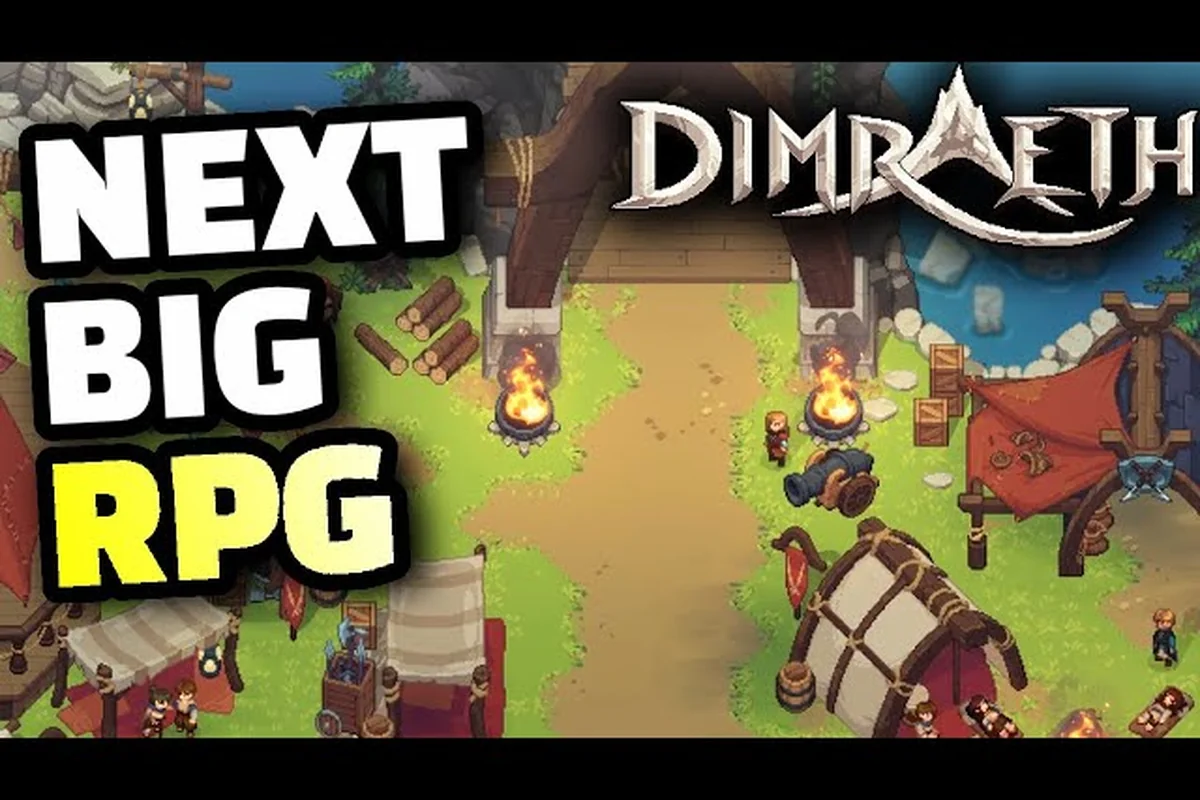
Choosing a hero in Dimraeth is not a single decision but a layered one. Every character begins as a combination of race and class, and that combination is what the studio Mudtek calls an Archetype. Because the launch build ships 8 races and 6 classes, the character creation screen quietly produces 48 distinct Archetypes, each with its own skill tree, attribute costs, and dialogue flavor. This Dimraeth character creation guide walks you through every layer of that screen, from reading the race-class grid to locking in your first ten skill points.
The reason this matters before you even reach Earlwood Village is that your Archetype choice affects XP scaling, dialogue Persona bias, and which passives show up in your early co-op lobbies. Rushing the screen and rerolling later is more expensive than the marketing lets on, so a clear read on the system is worth ten minutes of pre-launch reading.
How Archetypes Work in Dimraeth
An Archetype in Dimraeth is the permanent identity stamp of your character. It is not the same as your class, and it is not the same as your race. It is the intersection. A Minotaur Brawler is one Archetype; an Elf Magician is another. Each one is wired to a unique skill tree, and that tree is what most players will be staring at for the first hundred hours of Early Access.
The Race-Class Grid at a Glance
The race-class grid is the simplest way to picture the system. Eight races run vertically, six classes run horizontally, and every cell that the studio has marked as playable becomes a starting Archetype. The 48 total comes from 8 × 6, but not every cell is balanced the same way. Some races have a hard thematic pull toward one class, while others open up cleanly across all six.
| Race | Best Class Synergy | Mixed Class Viability | Weakest Class Pairing |
|---|---|---|---|
| Minotaur | Brawler | Magician, Shadow | Support caster |
| Human | Magician | All 6 | None — universal |
| Elf | Magician | Shadow, Support | Brawler |
| Orc | Brawler | Magician (hybrid) | Pure support |
| Dwarf | Brawler | Shadow | Magician |
| Tiefling | Magician | Shadow, Support | Brawler |
| Halfling | Support, Shadow | Magician (gimmick) | Brawler |
| Revenant | Shadow, Magician | Support | Brawler |
Players who want a single resource to lean on while making this decision can bookmark the Dimraeth class tier list overview for a deeper ranking of the six classes at Early Access launch, including per-stat weighting, Early Access patch notes on balance passes, and how each Archetype's opening skill tree branches interact with the race-class combos flagged in the table above. The overview also breaks down which races (Revenant, Halfling) get punished hardest by the current meta and which Human/Magician universal pairing remains the safest first playthrough pick for new players still learning Dimraeth's archetype-scaling rules.
Why Race and Class Are Locked Together
The reason Dimraeth treats race and class as a fused pair comes down to attribute scaling. Every race pays a different XP cost to raise a given attribute, and that cost is set by the race, not by the class. A Fairy Magician pays more XP to raise Strength than a Minotaur Brawler pays to raise the same stat. Class only changes which skills you can equip and which combat role you fill. Because the cost is on the race, swapping class does not reset your attribute investment the way a class reroll would imply.
For a deeper look at how the class half of that equation reshapes rotations, the Dimraeth class skill tree guide breaks down what each branch actually grants at level 25, including the passive +12% cooldown reduction on signature skills and the conditional +8% crit rate that only triggers when a Fairy stays below 70% HP — two numbers that meaningfully change how a Magician's stat budget should be allocated during character creation.
Reading the Dimraeth Stats Guide Layer
Stats in Dimraeth are not the deep spreadsheet that other RPGs have conditioned you to expect. There are a handful of core attributes, each tied to a primary pass on the character sheet, and each Archetype starts with a soft bias toward one or two of them. The Dimraeth stats guide layer of the creation screen is where you set the floor, because attributes raised at level 1 cost less than the same point assigned at level 24.
The Five Core Attributes
Every Archetype draws from the same five-attribute pool, even though the class skill tree only ever asks you to push three of them hard. The fifth is almost always a dump stat for any given build, but knowing which one to dump is half the value of the screen.
| Attribute | Primary Use | Most Synergistic Archetypes | Dump For |
|---|---|---|---|
| Strength | Melee damage, block value, grappling | Brawler builds, Minotaur lines | Pure casters |
| Dexterity | Attack speed, dodge, ranged crit | Shadow builds, Halfling lines | Tank Brawlers |
| Intelligence | Spell power, mana pool, magic XP cost | Magician builds, Elf lines | Brawlers |
| Wisdom | Buff duration, healing, mana regen | Support casters, Revenant lines | Burst DPS |
| Endurance | Stamina pool, health, block stamina | Tanks, Brawler tanks | Glass cannons |
Each Archetype has a primary attribute passive, and that passive is the one you want to level first because it scales with the attribute you push. A Minotaur Brawler's primary passive, for example, grants bonus stamina whenever Strength is leveled, so leaving Strength low actively wastes the passive.
How Persona Biases Your Dialogue
The Persona system is the social layer of the Dimraeth archetype guide, and it is the part most players miss. At character creation, you pick a Persona tag, and that tag biases which dialogue options show up strong in conversation with NPCs and companions. It does not lock you out of any quest line, but it does flavor the Earlwood Village recruitment conversations noticeably. A bold Persona gets more aggressive choices in Befr's caravan negotiations; a scholarly Persona gets more research-flavored options in Tamsin's Academy of Arcana dialogue.
The Persona tag is a purely social mirror in the Dimraeth character creation guide: it has no effect on the stat spread you allocate, the archetype points feeding into the Dimraeth skill tree, or the Dimraeth stats that govern hit chance and damage thresholds in Earlwood Village encounters. What it does influence is the tone and frequency of flavored dialogue branches in Tamsin's Academy of Arcana recruitment scenes, Befr's caravan haggling, and the random barks your companion fires at you during the intro arc. Because every Persona-tagged option also has a neutral fallback available, you can pick whichever tag fits the character you want to roleplay and revisit the same conversation in New Game+ to see the alternative branches without any combat penalty.
Mapping the Dimraeth Skill Tree Guide by Archetype
The skill tree screen is where your Archetype's identity becomes specific. Each tree has roughly 30 nodes at Early Access launch, gated behind level milestones, and roughly a third of them are archetype-locked. That means the spells and passives that show up in your tree will not show up in anyone else's, even if you share a class. Race is the differentiator.
How to Spend Your First Ten Points
A common question in Early Access testing is where to put the first ten skill points. The honest answer depends on your Archetype's primary passive, but the rule of thumb is the same across all 48: pour early points into the path that doubles down on your strongest attribute, not the path that opens utility nodes. Utility nodes feel productive, but the percentage scaling on your primary attribute will outpace them at low levels.
| Archetype Example | First 5 Points | Next 5 Points | Skip Until Level 15 |
|---|---|---|---|
| Minotaur Brawler | Strength scaling passives | Block value nodes | Grappling utility |
| Elf Magician | Fire spell power | Mana efficiency | AOE capstones |
| Human Magician | Hybrid weapon passive | Element spread | Capstone ultimates |
| Halfling Shadow | Crit chance nodes | Dodge stamina refund | Trap utility |
A solid companion to this section is the broader Dimraeth class skill tree guide, which compares the six class trees side by side. The race-specific nodes only show up once you commit to a race, so players who plan to reroll early should know that race-locked nodes are the most expensive thing to walk away from.
Capstones and Level 25 Realities
Every Archetype's skill tree ends in a capstone node, and at the Early Access level cap of 25, most players will only ever unlock one capstone per character. The cap is expected to rise with each new act according to the Dimraeth Steam store page, so the choice of capstone matters more in launch content than it will later. Players who want to stay current with the cap changes and other pre-launch patches can keep an eye on the Dimraeth difficulty guide and pre-launch update tracker.
Building the Best Race-Class Combos at Launch
The "best" race-class combo is the question every Dimraeth character creation guide gets asked first, and the honest answer is that it depends on whether you are playing solo or in a co-op lobby. The 48 Archetypes are not balanced identically for both, and the studio has been clear in community testing that solo and co-op tuning are tracked separately.
Top Five Solo Archetypes
Solo play rewards Archetypes that can self-heal, manage stamina alone, and contribute to every encounter role because there is no one to cover a weakness. The list below is based on community testing reports and the official archetypes page at mudtek.dev.
| Rank | Archetype | Why It Works Solo | Watch Out For |
|---|---|---|---|
| 1 | Minotaur Brawler | Self-heal, high stamina, block value | Slow first three levels |
| 2 | Human Magician | Hybrid weapon casting, universal stats | Squishy before level 10 |
| 3 | Elf Magician | Best raw spell scaling, mana pool | XP cost on Strength is brutal |
| 4 | Revenant Shadow | Burst damage, self-sustain passive | Positional skill floor |
| 5 | Dwarf Brawler | Tanky, great block stamina | Lower DPS than Minotaur |
Top Five Co-op Archetypes
Co-op play opens up Archetypes that would feel weak solo. A support caster who cannot self-heal in a duo becomes powerful in a 4-player group, and a glass cannon Shadow who struggles alone becomes a boss-damage monster with a Brawler holding aggro.
| Rank | Archetype | Co-op Role | Pair Best With |
|---|---|---|---|
| 1 | Tiefling Magician | Elemental DPS | Minotaur Brawler |
| 2 | Halfling Shadow | Burst rogue | Dwarf Brawler tank |
| 3 | Orc Brawler | Off-tank, hybrid DPS | Elf Magician |
| 4 | Tiefling Support | Buff healer | Any Magician |
| 5 | Human Magician | Flex caster | Any party comp |
Race customization details, including the specific color palettes and pattern overlays you can apply to each of the eight races, are covered in the Dimraeth race customization guide. It pairs naturally with the build choices above because the cosmetics layer does not affect stats but does affect the social layer of co-op play.
Common Mistakes in Dimraeth Character Creation
Even experienced ARPG players make predictable mistakes on the Dimraeth character creation screen because the system's blend of race-class fusion and Persona bias is unusual. The list below is not exhaustive, but it covers the four errors that show up most often in community testing reports.
Mistake 1: Ignoring Attribute XP Scaling
Players who assume class reroll will reset attribute investment are surprised to find that race-locked XP costs persist. The mistake is treating Strength as cheap because the class skill tree asks you to level it. The cost is on the race, not the class, so an Orc Magician pays Orc rates for every Strength point, which is high. Pick the attribute spread that matches the race first and the class second.
Mistake 2: Treating Persona as a Mechanical Tag
Persona does not gate quest lines, lock you out of companions, or change combat. Players who reroll to chase a Persona expectation often end up in the same dialogue tree they were already in. Treat Persona as flavor and move on.
Mistake 3: Skipping the Capstone Preview
The capstone node is visible at level 1 on the skill tree, even though it cannot be unlocked until much later. Skipping the preview is a common mistake because the first ten points feel urgent, but the capstone is the single largest power spike your Archetype will get before the level cap rises. Reading it once before you commit is fifteen seconds that prevents a hundred hours of regret.
Mistake 4: Assuming Universal Compatibility
The 48 Archetypes look balanced on paper, but a few combinations are noticeably weaker in Early Access. Fairy Brawler, Orc Magician (pure caster), and Halfling Brawler are the three combinations community testing reports flag as bottom-tier at launch. They are not unplayable, but they ask more of the player than most other Archetypes do.
Picking Your First Character: A Practical Workflow
Putting all of the above into a single workflow is the cleanest way to actually make a choice in under five minutes. The workflow below is what most community testers settle on after a few rerolls, and it is the closest thing to a "meta" approach at Early Access launch.
Step 1: Lock the Role
Decide whether you want to play solo or co-op first, because that determines the role you will fill. Solo play favors Brawler and hybrid Magician roles. Co-op play supports pure DPS, support, and tank roles equally. Locking the role first cuts the 48 Archetypes down to roughly 12 candidates.
Step 2: Check Attribute Costs
Open the attribute screen and look at the XP cost column for each of the five attributes. The cheapest attribute is the one your race wants you to push. The most expensive is your dump stat. If the dump stat matches the attribute your class wants to scale, the Archetype is a weak combination. If they diverge, the Archetype is strong.
Step 3: Preview the Capstone
Open the skill tree and read the capstone node description. The capstone tells you what your Archetype will feel like at level 25. If the capstone does not sound fun, no amount of early-game power will save the build, because the level cap is expected to rise with each new act.
Step 4: Pick a Persona
Persona is the last layer, and it is the layer that affects dialogue flavor. Pick a tag that matches the roleplay tone you want, because the Persona bias will show up in every Earlwood Village conversation. It does not affect combat, so there is no wrong answer here.
Step 5: Confirm and Save
Confirm the Archetype, save the character, and start the prologue. From this screen, a race reroll consumes a flat 5,000 XP penalty on top of the new race's baseline cost, whereas an archetype reroll within the same race only refunds 80% of the difference between branch skill-tree tiers — so most players keep their first choice for at least the first act, and only swap once they have unlocked a second archetype node at level 12.
Advanced Tips for Returning Players
Players who have already played one Early Access character and want to optimize a second can take advantage of a few shortcuts that first-time creators do not have. The Dimraeth archetype guide and skill tree guide are easier to read with context, and the character creation screen has a few "second character" toggles that streamline the process.
Speed-Creation Mode
Once you have created one character, the character creation screen adds a Speed-Creation toggle that lets you copy the race-class combo and just swap the class. This is the fastest way to test a class reroll without losing your race-locked attribute investment, and it is the workflow most testers use when they want to try every class on a single race.
Attribute Respec vs Race Reroll
Attribute respec exists, but it is expensive in Early Access and the cost scales with level. Race reroll is a separate, rarer option that effectively starts you over on attribute XP scaling. Most players should plan to respec attributes rather than reroll race, because race-locked skill tree nodes do not transfer.
Co-op Character Slots
Each co-op party slot remembers the last Archetype you played in that slot, so building a stable of two or three Archetypes that cover different roles is a strong early habit. The party composition matters more than any single character's power, especially in dungeons tuned for full 4-player groups.
The skill tree half of this loop is the layer that scales hardest in co-op, and players who want a deeper class-by-class breakdown can keep the Dimraeth magic class guide open while they test spell rotations on a hybrid Magician build.
Frequently Asked Questions
How many Archetypes are there in Dimraeth at Early Access launch?
There are 48 Archetypes at launch, made up of 8 races crossed with 6 classes. Each Archetype has its own skill tree, primary attribute passive, and Persona bias. The studio has confirmed that more races and classes are planned for future acts, which will expand the grid.
Can I change my Archetype after character creation?
You can change your class through a respec, but the race half of the Archetype is permanent on that save. Race reroll exists as a rare, expensive option that resets your attribute XP scaling but keeps your general progression. According to Mudtek's developer page, each Archetype is designed as a long-term identity, not a swap-friendly shell.
What is the best Archetype for solo play in Early Access?
The Minotaur Brawler is the most consistent solo Archetype at launch because of its stamina scaling, self-heal passive, and forgiving block value. The Human Magician is a close second for players who prefer caster play, especially because Humans have universal attribute costs and can flex into hybrid weapon-casting builds without penalty.
How do attribute XP costs work in Dimraeth?
Each race pays a different XP cost to raise each attribute, and that cost is fixed regardless of class. Strength costs more XP for a Fairy than for a Minotaur, for example. The class skill tree does not change those costs. This is why the Dimraeth stats guide recommends picking a race whose cheap attributes match the class you want to play.
Do Persona tags affect combat or just dialogue?
Persona tags only affect dialogue flavor. They bias which response options show up strong in conversations, but they do not gate quest lines, change combat power, or alter your Archetype's skill tree. The Persona system is the one layer of character creation that is safe to choose based on roleplay preference alone.