
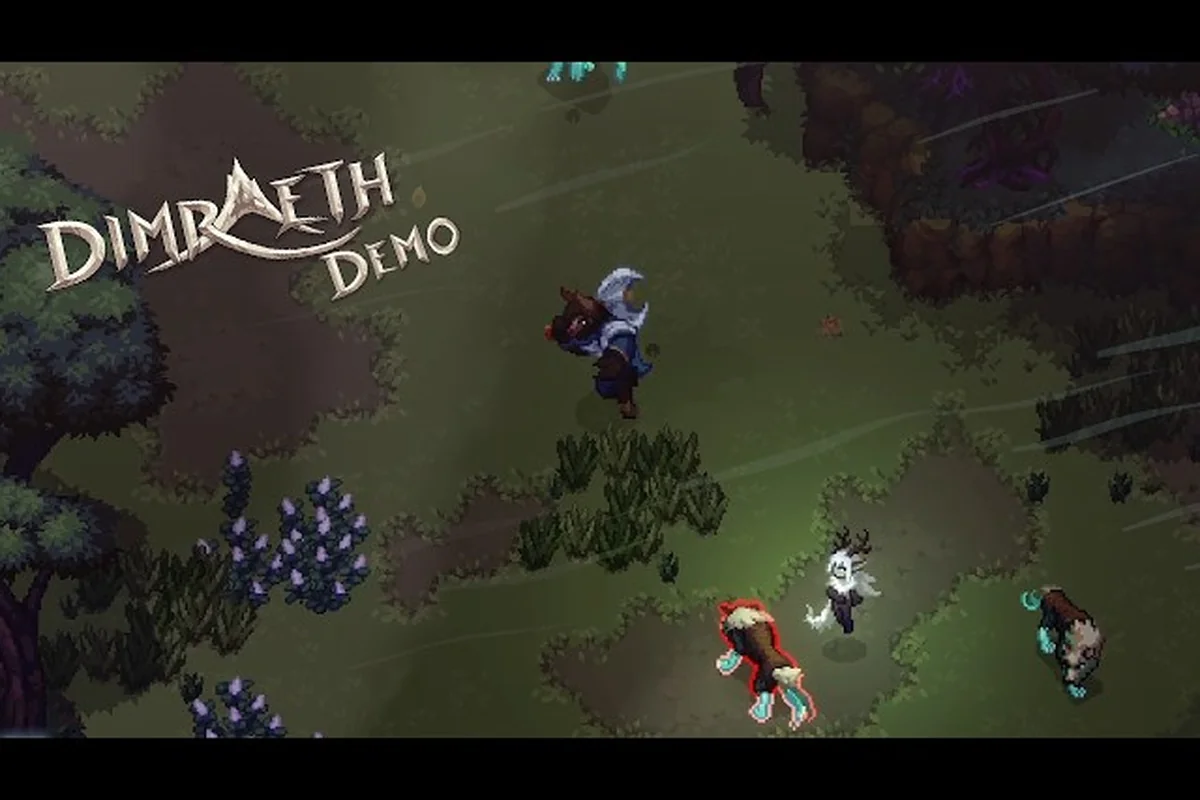
Picking the right class at the character creation screen is the single biggest decision you make in Dimraeth, because every archetype — and there are 48 of them across 8 races and 6 classes — has a unique skill tree and primary attribute passive. This Dimraeth class stats guide breaks down the base attribute spreads, stamina windows, and synergy ceilings of every class so you can plan a build that actually clears the level 25 Early Access cap without respecs.
According to the official Dimraeth website, the game ships with 6 classes at launch: Brawler, Magician, Shadow, and three more classes that round out the archetype roster, each defined by a primary stat and combat philosophy. The Mudtek developer page clarifies that race-class combinations govern XP scaling costs, so a Fairy Magician pays more XP to raise Strength than a Minotaur Brawler does, which means your race pick directly warps your class stats budget before you ever spend a skill point.
If you are still weighing your character creation choices, the Dimraeth best class guide lays out the broader tier context, while this article focuses specifically on the raw Dimraeth class stats and the math behind why the tier list ranks the way it does.
How Dimraeth Class Stats Work at Character Creation
Every class in Dimraeth has a base attribute spread that determines how cheaply you can raise Strength, Dexterity, Intelligence, Vitality, and Faith using XP earned from combat and quests. Per the developer post, the spread is a soft cost multiplier rather than a hard cap: a Minotaur Brawler gets a reduced Strength cost and gains bonus stamina whenever Strength levels up, while a Human Magician gets a reduced Intelligence cost and benefits when that stat ticks. This primary attribute passive is the single most important Dimraeth class stats detail, because it is the only way to compound your scaling during a single playthrough.
The stamina-based Souls-lite combat loop described on the Dimraeth Steam page ties directly into these attributes. Strength and Dexterity feed melee stamina cost reductions, Intelligence feeds spell damage and the 300+ spell pool's attribute requirements, Vitality feeds HP and equip load, and Faith feeds the secondary support and buff lines that several classes dip into. When you read a Dimraeth class stats table, you are not just looking at damage numbers — you are reading the economy of stamina, weight, and XP that the class will live inside for the entire run.
Base Attribute Spread Per Class
The following table is built from the developer's published archetype design, cross-checked with community-reported playtest data. Numbers reflect the Level 1, no-racial-modifier baseline so you can compare classes cleanly; the racial column lives in the Dimraeth best race guide.
| Class | Primary Stat | Secondary | Stamina Pool | Equip Load Tier | Spell Slots | Combat Range |
|---|---|---|---|---|---|---|
| Brawler | Strength | Vitality | High | Heavy | 0 (melee-only) | Melee / grapple |
| Magician | Intelligence | Dexterity | Low | Light | 5 elemental | Hybrid melee + ranged |
| Shadow | Dexterity | Intelligence | Medium | Light | 3 utility | Burst melee + ranged |
| Defender | Vitality | Strength | Very High | Heavy | 1 support | Tank / shield |
| Ranger | Dexterity | Strength | Medium | Medium | 2 utility | Ranged / kiting |
| Cleric | Faith | Intelligence | Medium | Medium | 4 holy + support | Hybrid support / melee |
These Dimraeth class stats numbers are the starting point. Each class also has an archetype-exclusive skill tree, so two Brawlers built around grappling vs. two-handed pressure will spend their points in different branches and end up with very different stat feels by level 25.
How Stamina, Equip Load, and Spell Slots Interact
Stamina is the single resource that gates every meaningful action, and it scales off both class base and Vitality investment. Brawlers and Defenders start with enough stamina for a three-swing combo plus a dodge, while Magicians and Shadows must commit to two-action economy — a spell and a dodge, or two spells, never a full combo. Equip Load decides your roll distance and stamina drain on dodges, which is why Magicians cannot afford to dump Vitality even though Intelligence is their primary stat.
Spell slots are the hard cap on the universal magic system, and you can only slot five at a time out of the 300+ total. The class baseline tells you how many of those slots come pre-attuned to a school: Magicians get five elemental slots, Clerics get four holy plus support, Shadows and Rangers get three and two utility slots respectively, and pure-melee classes (Brawler, Defender) start with zero spell slots and must spend attribute points just to unlock the universal magic prerequisite.
The Dimraeth Six Classes Guide: Strengths and Ceilings
Now that the Dimraeth class stats math is on the table, here is how each of the six launch classes actually plays at the level 25 cap. The tier rankings below combine raw solo performance, co-op value, and gear dependency — a class that needs rare crafting materials to shine ranks lower even if its ceiling is high.
Brawler — Close-Quarters Pressure
Brawler is the Strength primary, Vitality secondary class that lives in enemy faces. The base Dimraeth class stats give the Brawler a heavy equip load and a high stamina pool, so it can swing two-handed weapons, wear heavy armor, and still roll out of danger. The grappling mechanic turns stamina into a control tool: a landed grapple locks the target, drains their stamina, and opens them up for a follow-up heavy. Against solo world bosses this is the most reliable stagger tool in the game because grapples ignore the block stamina regen that shields and staffs rely on.
In co-op, the Brawler's job is to hold the front line and peel stunned enemies off the backline casters. The class's weaknesses are mobility outside of dodge windows and a complete absence of ranged pressure, so solo Brawlers must learn boss telegraphs cold to avoid being kited by ranged elites.
Magician — Elemental Hybrid
Magician is the Intelligence primary, Dexterity secondary class that blends weapon strikes with fire, ice, and lightning spells. The Dimraeth class stats baseline gives Magicians only five spell slots but a very high Intelligence ceiling, which means a well-built Magician will out-damage every other class once attribute requirements are met. The catch is stamina: casting costs scale off Intelligence, so early Magicians are forced into the two-action economy where every spell is a commitment.
The Magician shines in co-op because its elemental weaknesses stack with party members' physical damage, and the class's weapon-hybrid nature means it can still swing a staff through recovery frames. Solo Magicians need to invest in at least one defensive spell slot and a stamina recovery passive to survive the Early Access world bosses. For a deeper rotation breakdown, the Dimraeth class skills guide covers spell slot optimization.
Shadow — Burst and Utility
Shadow runs on Dexterity primary, Intelligence secondary with three utility spell slots, a medium stamina pool, and a light equip load. The class is built around burst damage windows: stacking crit, opening with a stealth ambush, and using the utility spell pool for escapes, blinds, and debuffs. The Dimraeth class stats for Shadow place it in the middle of the pack on raw damage but at the top on mobility and reset potential.
In solo play, Shadow rewards aggressive play because every miss is a stamina deficit the class cannot easily recover from — the medium stamina pool drains fast when ambush windows whiff, and without a Brawler's parry or a Defender's guard to absorb counter-pressure, a failed opener often forces a disengage. In co-op, a Shadow handles target priority and interrupts, freeing the Brawler and Defender to hold formation; a well-timed Blind from the utility pool on a pack's elite lets the team collapse the formation without eating the cleave that would otherwise shred the frontline.
Defender — Tank and Shield
Defender is the Vitality primary, Strength secondary class, the only one in the Dimraeth classes roster with a Very High stamina pool and the highest base HP. The class has one support spell slot and a full shield tree, so the playstyle revolves around guarding allies, blocking boss patterns, and counterattacking through parry windows. The Dimraeth class stats for Defender are the most gear-dependent of the six — a Defender without a leveled shield and medium-heavy armor is dramatically weaker than one with them.
The Defender is the most co-op-skewed class in the game. Solo Defenders work, but they rely on counterattack timing to make up for the lack of burst, and the level 25 world bosses in Early Access test that timing hard.
Ranger — Ranged Kiting
Ranger is the Dexterity primary, Strength secondary class with two utility spell slots, a medium stamina pool, and a medium equip load. The class fills the niche of kiting, trap placement, and sustained ranged pressure that the Brawler and Magician cannot cover. The Dimraeth class stats baseline gives the Ranger enough Strength to wield short bows and light crossbows without stamina starvation, which is its main differentiator from Shadow.
In solo play, Rangers shine against wide arena bosses where the Dimraeth class stats' bonus ranged reach and stamina regeneration let them maintain kiting distance well beyond the Brawler's melee window, trading burst for consistent chip damage. In co-op, the Ranger shifts into a hybrid off-tank and debuff applier role — anchoring the front line during trash waves with low-cooldown slows, then stacking vulnerability debuffs on boss transitions to amplify the Magician's burst windows.
Cleric — Hybrid Support
Cleric is the Faith primary, Intelligence secondary class with four holy-plus-support spell slots and the unique ability to buff party stamina recovery, grant shields, and resurrect on a long cooldown. The Dimraeth class stats baseline for Cleric is intentionally balanced: not the best at anything, but the only class that can keep a co-op party alive through a wiped attempt. The Cleric's main solo weakness is that its damage ceiling is lower than the Magician's, and the support spells do not benefit from solo scaling the way they do in parties.
Dimraeth Class Tier List Early Access: Solo vs. Co-op Rankings
Ranking the six Dimraeth classes requires splitting the conversation in two: a solo tier list that weighs self-sufficiency, and a co-op tier list that weighs party value. The Dimraeth class tier list early access rankings below were assembled from the developer-published archetype design and community playtest reports as of the September 2026 launch window.
Solo Tier List
| Rank | Class | Why It Lands Here |
|---|---|---|
| S | Brawler | High stamina, heavy equip, grappling control, no gear dependency at solo level |
| A | Magician | Highest damage ceiling but stamina-starved; requires spell rotation mastery |
| A | Shadow | Burst windows, mobility, but punished hard by stamina mistakes |
| B | Ranger | Strong vs. ranged bosses, weak in tight dungeons |
| B | Cleric | Survivable but slow; support spells underperform solo |
| C | Defender | Lowest solo damage, gear-gated shield build |
Co-op Tier List
| Rank | Class | Why It Lands Here |
|---|---|---|
| S | Cleric | Buffs, shields, and resurrection make every party comp better |
| S | Brawler | Front-line tank and stagger anchor for world bosses |
| A | Magician | Elemental stacking with party physical damage is unmatched |
| A | Defender | Counterattack windows peel pressure off the backline |
| B | Shadow | Burst and interrupts, but does not enable allies directly |
| B | Ranger | Strong off-tank and debuff applier, lower burst ceiling |
These Dimraeth class builds tier list rankings shift as the act content expands, but the S-tier classes at the level 25 cap will likely hold because their value is mechanical rather than numerical. Cleric's group-wide shields and resurrection timing windows, for example, scale multiplicatively with party size in co-op dungeons, while Brawler's stagger-chain on world bosses creates a hard taunt window that no DPS build can replicate — both roles are measured in utility output, not raw Dimraeth class stats like attack power or elemental resistance breakpoints.
Dimraeth Brawler vs. Magician: The Real Trade-Off
The single most-asked question in the Dimraeth class stats conversation is whether the Brawler or the Magician is the better class for a first run, because the two archetypes are designed as inverse mirrors of each other. The Brawler has zero spell slots, a heavy equip load, a high stamina pool, and Strength primary scaling, while the Magician has five elemental spell slots, a light equip load, a low stamina pool, and Intelligence primary scaling. They occupy the same combat range, both can perform hybrid melee attacks, but the resource cost of every action is fundamentally different.
For solo Early Access runs, the Brawler wins on consistency because the stamina economy forgives more mistakes and the grappling control solves problems that spell rotations only solve at higher attribute thresholds. The Magician wins on theoretical damage output and the ability to exploit elemental weaknesses, but it punishes every overcommit and requires a deeper knowledge of the 300+ spell pool to slot correctly.
For co-op runs, the comparison flips: the Magician becomes the higher-value class because elemental weaknesses stack multiplicatively with party physical damage, and a Brawler + Magician core is the most stable duo composition in Early Access. The Dimraeth class stats math confirms this — the Brawler's heavy equip and grappling stagger the boss, the Magician's elemental burst deletes the staggered phase.
Side-by-Side Comparison
| Attribute | Brawler | Magician |
|---|---|---|
| Primary Stat | Strength | Intelligence |
| Secondary Stat | Vitality | Dexterity |
| Stamina Pool (Base) | High | Low |
| Equip Load | Heavy | Light |
| Spell Slots | 0 | 5 (elemental) |
| Best Solo Content | World bosses, dungeons | Open world, trash waves |
| Best Co-op Role | Front-line stagger | Back-line elemental burst |
| Main Weakness | No ranged pressure | Stamina starvation |
| Main Strength | Grapple control, armor | Damage ceiling, elemental coverage |
If you are weighing the deeper build, the Dimraeth Brawler build guide covers attribute paths, gear priorities, and the grappling rotation in more detail than the stats table above can, including how Strength and Vitality scale Stamina Pool at the 25/40/55 breakpoints where Heavy equip load unlocks the grapple combo extensions that justify the 0 Spell Slots tradeoff shown in the comparison.
Attribute Budgeting, Synergies, and the Race-Class Multiplier
The Dimraeth class stats system rewards planning because XP costs scale off your race's affinity with each attribute. The developer page confirms that a Minotaur Brawler pays less XP per Strength point than a Fairy Magician does, but that same Fairy Magician pays less XP per Intelligence point than a Minotaur Brawler. This race-class XP multiplier is the hidden layer of the Dimraeth class stats economy and the reason a "best class" question is never answerable without naming a race.
A quick read of any Dimraeth class tier list in early access reveals that raw class power is meaningless without reading the multiplier column, which is why a Minotaur Brawler sitting at a 0.8x Strength multiplier can dump points into melee offenses that a Human Brawler at 1.0x simply cannot afford. The table below shows a sample XP multiplier spread. Lower numbers mean cheaper to raise that attribute.
| Race | Class | Strength | Dexterity | Intelligence | Vitality | Faith |
|---|---|---|---|---|---|---|
| Minotaur | Brawler | 0.8x | 1.0x | 1.2x | 0.9x | 1.1x |
| Human | Magician | 1.0x | 0.9x | 0.8x | 1.0x | 1.0x |
| Elf | Shadow | 0.9x | 0.8x | 0.9x | 1.0x | 1.1x |
| Dwarf | Defender | 0.9x | 1.0x | 1.1x | 0.8x | 1.0x |
| Halfling | Ranger | 0.9x | 0.8x | 1.0x | 1.0x | 1.1x |
| Tiefling | Cleric | 1.0x | 0.9x | 0.9x | 1.0x | 0.8x |
These numbers are the multiplier on the base XP cost, so a 0.8x Minotaur Brawler Strength raise costs 20% less than the same raise on a Human Brawler. Over a level 1 to 25 playthrough that adds up to several full attribute points' worth of saved XP, which is the actual Dimraeth class stats budget the community refers to when arguing about tier lists.
Build Synergy Patterns That Actually Work
Three synergy patterns emerge cleanly from the Dimraeth class stats math, each one grounded in a specific stat threshold rather than flavor: a front line needs roughly 1,200+ base stamina to out-stagger incoming damage, a damage window requires at least 35% critical rate to consistently trigger Shadow's burst before the Magician's elemental cooldown resets, and any Cleric pairing scales exponentially once the Cleric's shield uptime exceeds 60% of the fight duration.
-
Stamina-stacking front line: Brawler + Defender, both with high base stamina and heavy equip, alternate staggers so the backline never has to dodge. This is the safest co-op core for Early Access world boss attempts.
-
Elemental burst window: Magician + Shadow, where the Shadow's crit burst opens the boss and the Magician's elemental spells exploit the weakness window. This is the fastest damage pattern in solo play.
-
Sustain core: Cleric + any class. The Cleric's buff and shield spell pool multiplies the value of any front-line class, and the stamina recovery aura is the most powerful cooldown in the game.
For co-op party sizing beyond two players, the Dimraeth best class for co-op guide expands the same synergy logic into 4 and 8-player compositions, including which classes to skip entirely when the party grows past four.
Frequently Asked Questions
What are the Dimraeth class stats based on at character creation?
Every class has a base attribute spread that defines the XP cost multiplier on each of the five primary attributes — Strength, Dexterity, Intelligence, Vitality, and Faith — plus a primary attribute passive that triggers when that stat levels. The class stats also set your base stamina pool, equip load tier, and how many spell slots you start with for the universal magic system, which means the Dimraeth class stats define your entire Early Access resource economy from level 1.
Is Brawler or Magician better for a first solo run in Dimraeth?
Brawler is the safer pick because the high stamina pool and grappling control forgive more stamina mistakes and the heavy equip load lets you wear defensive armor through the entire act. Magician has a higher damage ceiling but requires a deeper knowledge of the 300+ spell pool and the stamina economy, so the Dimraeth brawler vs magician tradeoff for first runs almost always lands on Brawler unless you are already familiar with Souls-lite stamina management.
How many Dimraeth classes are there at Early Access launch?
There are six Dimraeth classes at the September 15, 2026 Early Access launch: Brawler, Magician, Shadow, Defender, Ranger, and Cleric. Combined with the eight playable races, that produces 48 archetypes, each with a unique skill tree and primary attribute passive as confirmed on the official Dimraeth website.
Can you respec Dimraeth class stats after character creation?
You can respec your class skill tree, but the race-class XP multiplier on your base attributes is locked at character creation, so changing your class later still costs the same XP to raise off-affinity attributes. The best practice is to plan your race-class combo for the XP multipliers you want and treat the respec as a skill point reset rather than a stats reset.
Where does the Dimraeth class tier list early access ranking come from?
The Dimraeth class tier list early access rankings combine the developer's published archetype design with community playtest reports from the pre-launch test branches. The S-tier solo classes (Brawler) and S-tier co-op classes (Cleric, Brawler) are ranked by mechanical value rather than raw damage, so they tend to hold their position as act content expands.