
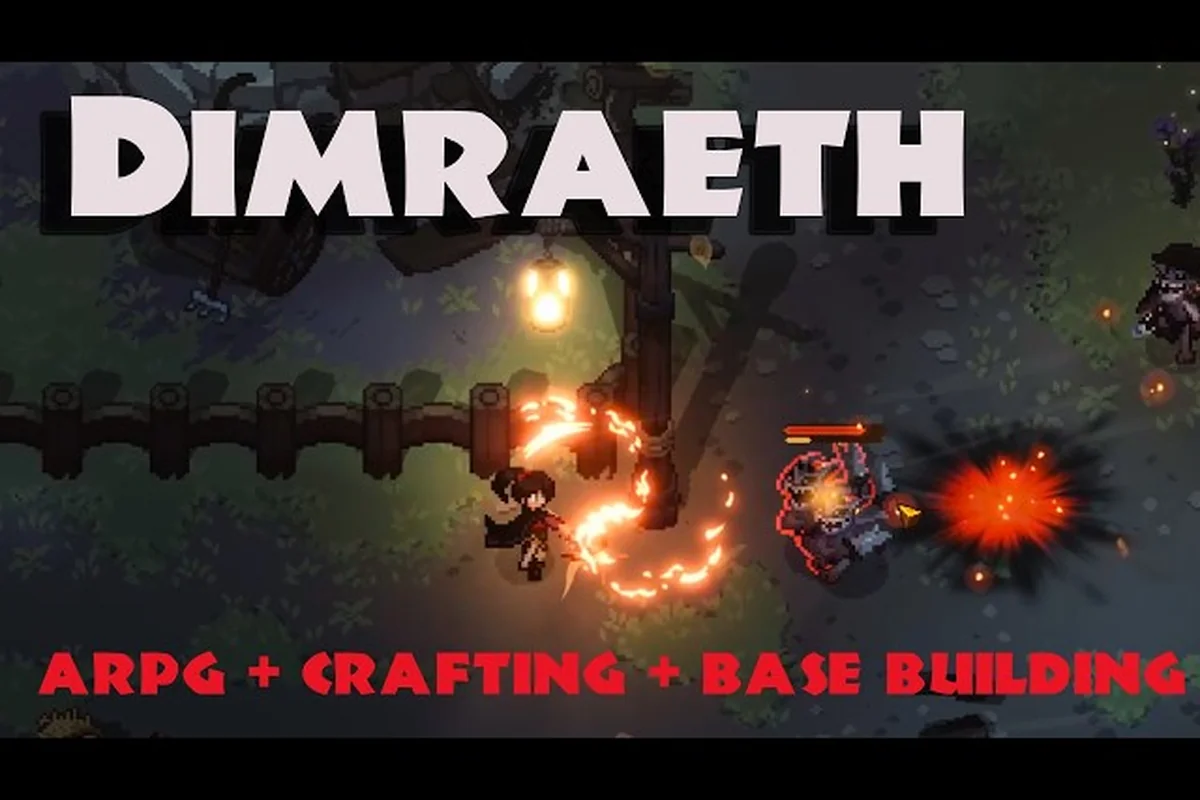
Dimraeth crafting is optional by design, but every party that invests in it ends up clearing the same encounter two or three levels sooner than parties that skip it. This Dimraeth crafting guide walks through recipes, stations, and gear upgrades so your weapons and armor keep pace with the level curve instead of dragging behind it.
The system rewards experimentation. You can craft from your backpack, drop items into slots without a known recipe, and let the Crafting Codex track what you have not yet discovered. According to the Dimraeth Steam page, food and potions also feed into the same economy, with food granting roughly 30-minute percentage-based stat buffs and potions covering everything from burst healing to throwable elemental utility. The rest of this guide breaks down how to use all of that on a fresh save.
How the Dimraeth Crafting System Works
Dimraeth crafting lives in two places: your backpack and dedicated crafting stations. Both share the same slot interface, but stations unlock recipes that the backpack cannot. The official site lists eight playable races and six classes, and the crafting layer is class-agnostic, which means a Magician and a Brawler can use the same recipe book as long as they gather the same materials. Players who want a deeper look at how crafting feeds into the broader progression loop can cross-reference the Dimraeth progression system guide alongside this one.
The crafting economy has three pillars: raw materials gathered in the open world, recipes either found or experimented into, and stations that gate higher-tier output. Most recipes are gated by station type rather than by character level, so finding the right workshop matters more than grinding XP.
Core Crafting Rules
-
Slot-based assembly: Place any item into a slot and the interface either resolves a recipe or shows the missing pieces. This applies in the backpack and at stations.
-
Codex tracking: The Crafting Codex logs every recipe your character has discovered per item, plus recipes you are one or two components away from completing.
-
Station gating: Higher-tier recipes require specific stations — forges for metalwork, alchemy tables for potions and food, and tanneries for leather armor. You can see which station each recipe demands directly in the Codex entry.
-
No level lock: Crafting is not gated behind a character level. Progress is measured by what you have found and what you can build, not by XP bars.
| Crafting Layer | Where It Lives | What It Unlocks | Gating Mechanic |
|---|---|---|---|
| Backpack crafting | Open anywhere, even in the field | Basic consumables, low-tier gear | Material presence only |
| Forge | Settlement and hub workshops | Weapon crafting, metal armor | Station access + heat source |
| Alchemy table | Hub, camps, and some dungeons | Potion crafting, food buffs | Station access + clean water |
| Tannery | Leatherworker shops in towns | Armor crafting for light and medium sets | Station access + curing rack |
Players who focus on the Dimraeth crafting system from the first hour tend to reach the mid-game bench of stations about three to five in-game days earlier than players who ignore it, because station locations often double as fast-travel anchors.
Recipe Discovery and the Crafting Codex
Recipes are not handed out by quest rewards alone. Dimraeth hides them in three layers: world drops (notes, schematics, scribbled diagrams in dungeons), NPC dialogue (certain merchants hint at the components of a recipe without naming the result), and experimentation (placing items into slots until something snaps into place). The Crafting Codex displays undiscovered recipes per item, so once you have held a component, the Codex tells you what other pieces you still need.
How to Unlock New Recipes Fast
-
Read everything: Scrolls and book entries in dungeons frequently describe a recipe's components in narrative form. The Codex matches the components, not the text.
-
Buy station-adjacent merchants dry: Blacksmiths sell metal ingots, tanners sell cured leather, and herbalists sell bundled reagents. Stocking a station vendor gives you the missing pieces for several Codex entries at once.
-
Drop unusual combinations into the forge: Two metal ingots plus a third material often resolves into a mid-tier weapon you did not know existed. The Codex logs the result the first time it resolves.
-
Talk to NPCs twice: Some vendors only mention recipe hints during their second conversation, after you have cleared a nearby camp. The dialogue option does not look like a tutorial.
| Discovery Method | Speed | Reliability | Best For |
|---|---|---|---|
| World scrolls and notes | Medium | High (named recipe) | Lore-heavy players |
| NPC dialogue hints | Slow | Medium (partial) | Completionists |
| Experimentation in slots | Fast | Variable | Players who like surprises |
| Codex reverse-engineering | Fast | High (clear missing list) | Min-max crafters |
If you are still learning Dimraeth how to craft from scratch, the Codex is your single best feedback loop. The interface shows which slots are still empty, and once a recipe resolves, you can re-craft it indefinitely as long as the station and materials are available.
Recipe Categories and Tier Curves
Dimraeth crafting recipes fall into four practical categories: weapons, armor, consumables, and station upgrades. Each category has a tier curve (Basic, Standard, Refined, Masterwork) and a station that usually caps output at a specific tier until you find a better workshop.
Weapon Crafting
Dimraeth weapon crafting uses the forge, and recipes break into three families: blades (swords, daggers, axes), blunt (maces, hammers, staves), and ranged (bows, crossbows, thrown). A single forge can produce all three families, but Masterwork blades require a forge with an anvil upgrade, and Masterwork ranged weapons require a forge with a fletching bench. The community has cataloged at least 24 base weapon shapes, and most shapes support at least four tiers before the curve plateaus.
| Weapon Family | Tier Range | Key Components | Best For |
|---|---|---|---|
| Blades | Basic → Masterwork | Metal ingots, leather grip, hilt alloy | Magician and Brawler off-hand |
| Blunt | Basic → Refined | Iron rods, binding wire, head mold | Stun-heavy encounter setups |
| Ranged | Standard → Masterwork | Bowstave wood, sinew string, fletching | Kiting and trap-laying builds |
Armor Crafting
Dimraeth armor crafting splits across two stations: the forge for metal plates and the tannery for leather and hide. Cloth armor can be assembled in the backpack because it does not require a heavy workstation, but it caps out at Standard tier regardless of materials. Players who plan to tank hits in the later acts should expect to invest in both a forge and a tannery rather than skipping one.
| Armor Type | Station | Tier Cap Without Upgrade | Tier Cap With Upgrade |
|---|---|---|---|
| Cloth (light) | Backpack | Standard | Standard (no upgrade path) |
| Leather (medium) | Tannery | Refined | Masterwork with curing rack |
| Plate (heavy) | Forge | Refined | Masterwork with quenching tub |
For more on the practical side of armor work, the Dimraeth crafting bench guide covers station upgrades in detail, including which bench add-ons raise your tier ceiling and how to unlock them.
Consumables and Buffs
Food and potions share the alchemy table. Food gives timed percentage-based stat buffs for roughly 30 minutes: increased max health, concentration, stamina, regeneration, and elemental resistances. Potions recover health, concentration, or stamina on demand, and a subset can be thrown for area-of-effect elemental damage or healing. Players who learn both food and potion recipes essentially double their effective stamina pool during long dungeon runs.
| Consumable | Duration | Effect Type | Stack Limit |
|---|---|---|---|
| Hearty stew | ~30 min | Percentage max health | 1 (timer-based) |
| Focus broth | ~30 min | Percentage concentration | 1 |
| Stamina roast | ~30 min | Percentage stamina | 1 |
| Healing potion | Instant | Burst health | 5 |
| Concentration potion | Instant | Burst concentration | 5 |
| Throwable potion | Instant | AoE elemental | 3 |
A practical Dimraeth crafting guide always budgets time for consumables because they directly affect combat performance. Players who want to pair crafting with combat tuning should look at the Dimraeth combat guide for stamina and parry windows, since the buffs above feed into those exact resources.
Crafting Stations and Where to Find Them
Stations live in three layers of the world: hubs (the central settlement and faction camps), town workshops (forge, tannery, alchemy), and field stations (smaller camps with one or two stations). Hubs and town workshops carry the full upgrade path; field stations usually cap at Standard tier and exist so you can craft consumables on the road.
| Station Layer | Example Location | Tier Cap | Notes |
|---|---|---|---|
| Hub workshops | Central settlement, faction camps | Masterwork (with add-ons) | Always has the basic stations |
| Town workshops | Named towns on the map | Refined → Masterwork | Often have one specialty bench |
| Field stations | Camps, waypoints, dungeon entrances | Basic → Standard | Craft consumables between fights |
When you are learning Dimraeth equipment crafting, the fastest path is to clear the first hub, upgrade the forge and alchemy table there, and then push outward. That single hub will carry you through roughly the first third of the game with the right add-ons, and it acts as a fast-travel anchor for everything you gather.
Station Upgrade Path
Each station supports two upgrade add-ons. Installing both raises the tier ceiling by one step and unlocks Masterwork recipes. The add-ons themselves are crafted at a higher-tier station of the same family, which means you have to find a Masterwork-capable workshop somewhere in the world to bootstrap the upgrade. The community has mapped at least one Masterwork-capable forge, tannery, and alchemy table per act, so the upgrade curve stays reachable without grinding.
Gear Upgrades and Keeping Ahead of the Level Curve
The level curve in Dimraeth is steep past the midpoint, and gear upgrades are the main way to keep up without burning consumables on every encounter. Each Masterwork weapon and armor piece has a small set of upgrade slots that accept specific materials, and those upgrades are independent of the crafting tier of the item itself. You can find a Standard-tier weapon in a dungeon, upgrade its components, and end up with a piece that performs close to a freshly-crafted Masterwork item.
| Upgrade Slot | Material Category | Effect | Best Source |
|---|---|---|---|
| Hilt | Metal alloy, grip leather | Attack speed, parry window | Blacksmith vendors |
| Edge | Whetstone, sharpening oil | Damage, armor penetration | Dungeon chests |
| Plate | Rivet set, plating | Damage reduction, weight | Town forges |
| Lining | Padding, treated cloth | Resistance, stamina drain | Tanneries |
Players who treat upgrades as a separate loop from initial crafting tend to outscale the level curve more reliably than players who only chase the highest crafting tier. A Standard-tier piece with three fully-upgraded slots often outperforms a Masterwork piece with empty slots, because the upgrade values compound at the component level rather than the base level.
Tips for Staying Ahead
-
Upgrade before you replace: When a new weapon drops, transfer upgrade materials from the old one if the new one accepts the same component type.
-
Carry a station vendor kit: Each town workshop vendor stocks one or two upgrade components that other merchants do not. Buy them out before leaving town.
-
Use Codex reverse-engineering: The Codex tells you which upgrade slots a specific weapon or armor piece supports, so you can target materials instead of guessing.
-
Stack food and potion buffs before crafting Masterwork pieces: Some Masterwork recipes have a small chance of producing an exceptional version. Food buffs that boost concentration increase that chance during long crafting sessions.
Frequently Asked Questions
Is crafting mandatory in Dimraeth?
Crafting is not mandatory, but the official Steam page describes it as optional yet impactful. Parties that invest in food, potions, and gear upgrades clear later encounters faster, while parties that skip crafting rely more heavily on world drops and consumable purchases.
Where do I find the first Masterwork-capable forge?
The first Masterwork-capable forge is in the central hub settlement once you complete the act-1 faction questline. It supports both upgrade add-ons and unlocks every weapon family in the game. For a full breakdown of the add-ons themselves, the Dimraeth crafting leveling guide walks through the resource cost of installing them.
Can I craft in co-op?
Yes. Dimraeth is a 1-8 player co-op fantasy RPG, and crafting stations are shared. Any party member can use a station if the host's instance has it unlocked, and the Codex tracks discoveries per character rather than per party.
What is the best use of food buffs?
The best use of food buffs is stacking them before long dungeon pushes or boss attempts. Because the buffs last roughly 30 minutes and stack additively with equipment, a single well-timed meal can lift your effective stamina and health pools by 20-30 percent for the duration of a tough pull.