
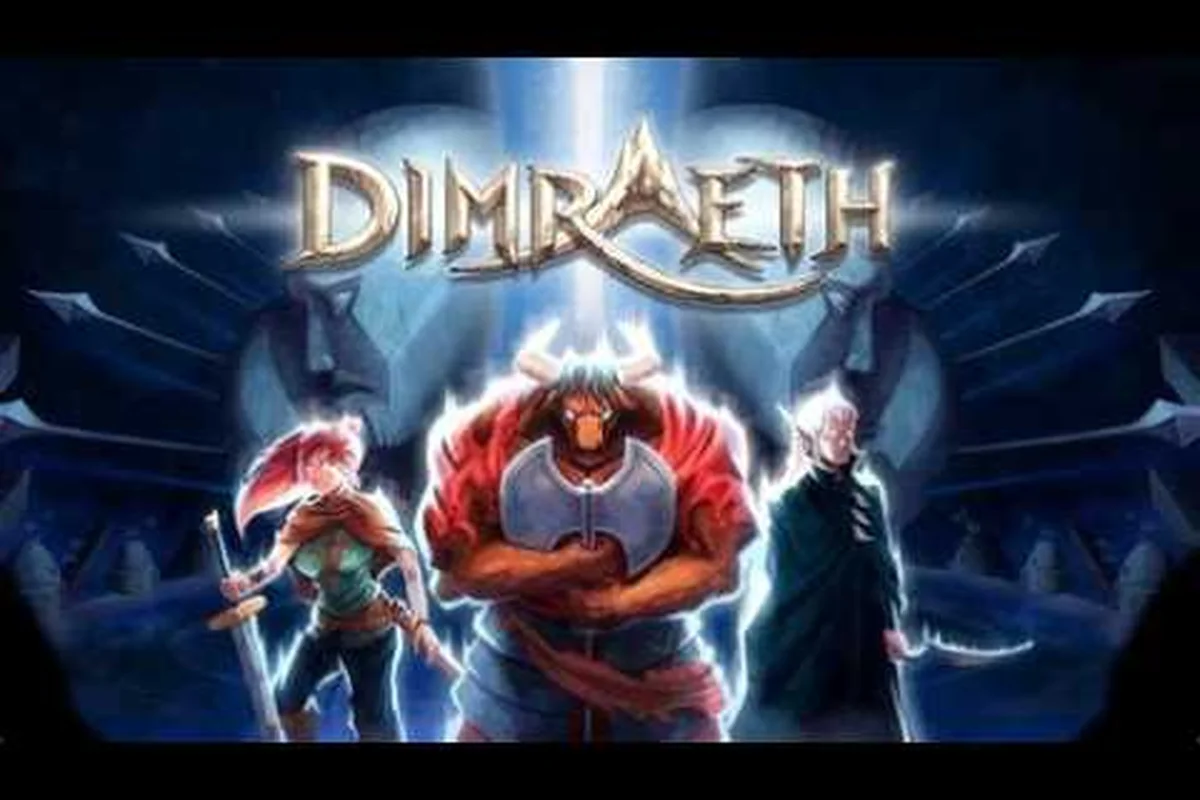
Dimraeth's dark gods lore is the thread that ties every ruined shrine, broken ritual, and cursed region of Mirkea together. The world is corrupted, and Sylbos, the last Ogre Magi, seeks to claim Dimraeth while you awaken carrying immortality from a failed rite. This lore primer walks you through the ancient powers behind the corruption, the Guild Hall quest lines that frame the campaign, the world bosses that embody each fallen deity, and how the weather and season system reinforces the story. Early Access launches on September 15, 2026 with a level cap of 25, so understanding this foundation now means you walk into Mirkea already fluent in the names your party will shout at dusk.
The Mythic Backbone of Dimraeth Dark Gods Lore
The Dimraeth dark gods lore is not a single manuscript but a layered oral tradition spread across Mirkea's regions. According to the official Dimraeth website, the world is corrupted, and Sylbos, the last Ogre Magi, seeks to claim Dimraeth while the player character awakens with immortality from a broken ritual and joins wizard Faustas against the dark gods. That single sentence carries three narrative pillars: an ancient order of Magi, a ritual that broke reality, and a council of deities whose hunger triggered both. Every region you walk through is a scar left by one of those events.
The Ogre Magi and the Broken Ritual
Long before the player wakes in Earlwood Village, the Ogre Magi were an order that bent elemental forces through channeling circles drawn into living stone. Faustas, the wizard who eventually allies with you, is described on the official site as a Magician class archetype who blends elemental magic with weapon strikes across fire, ice, and lightning. That class description is more than gameplay flavor because it mirrors the Ogre Magi tradition of fusing arcane and martial discipline. Sylbos is the last surviving practitioner, and his attempt to seize godhood is what shattered the ritual that should have stayed buried beneath Mirkea. The immortality you carry is a side effect of that broken rite, which is why Faustas keeps you close: your existence is itself a piece of evidence.
| Lore Pillar | In-Game Anchor | Story Function |
|---|---|---|
| Ogre Magi order | Sylbos as last practitioner | Antagonist origin |
| Broken ritual | Player immortality at awakening | Personal stake |
| Wizard Faustas | Magician class archetype | Allied mentor |
| Dark gods | Each world's region corruption | Campaign arc |
| Guild Hall | Earlwood Village starting hub | Quest launcher |
Mirkea as a Living Mythology
Mirkea is the handcrafted pixel world that hosts this mythology, and every biome reflects a different layer of the Dimraeth dark gods lore. The official store page describes Mirkea as a region covering forests, weather, and seasons that shift, with Earlwood Village acting as the starting hub that contains the Guild Hall, blacksmith, and merchant caravans. The world itself is one of the largest narrative devices in the game, because shifting weather and turning seasons are not cosmetic backdrops. They are the dark gods breathing on the land, and you read their intent through environmental storytelling long before any quest log spells it out.
Ancient Magic Origins and the Dimraeth Ancient Magic Guide Thread
The Dimraeth ancient magic guide tradition is older than the Ogre Magi, and the dark gods lore treats it as the deeper root system beneath every spell you cast. Ancient magic in Mirkea was not invented so much as uncovered, drawn from ley lines that the dark gods themselves once used to feed. When Sylbos tore the ritual apart, those ley lines cracked open, and the wild elemental volatility you see in Goblin Caves and the Lost Caverns is the long-tail consequence. Players who learn to read magic as geology, rather than as menus, advance through the ancient magic guide content much faster because the story rewards that frame of mind.
Fire, Ice, and Lightning as Three Faiths
The Magician class on the official site wields elemental magic blended with weapon strikes, drawing on fire, ice, and lightning. Inside the dark gods framework, those three elements map to three ancient faiths that once competed for the favor of the deities. Fire was the forge-faith of the Ogre Magi, ice was the preservation-faith of northern shamanic circles, and lightning was the storm-faith of the Wildwood canopy druids. The corruption that Sylbos unleashed did not invent new magic, it simply destabilized the balance those three faiths had policed for centuries, which is why the world reacts so violently to every Magician spell you cast.
| Element | Faith Origin | Corruption Sign | Recommended Region |
|---|---|---|---|
| Fire | Ogre Magi forge | Scorched ritual circles | Goblin Caves |
| Ice | Northern shamans | Frozen ley nodes | Lost Caverns |
| Lightning | Wildwood druids | Cracked canopy shrines | Wildwood Forest |
| Combined | Faustas synthesis | Storm-front weather shifts | Earlwood Village |
Reading Ancient Magic Through Environment
If you treat the weather and season system as a magic meter, the story tells itself. According to the official site, Mirkea shifts through weather and seasons that visibly change how regions feel, and that visual shift is the most reliable signal of ancient magic in motion. Storm fronts roll in when a ley node fractures, early snow settles over the Farmlands when an ice-faith shrine is desecrated, and ash-fall hazes the horizon whenever fire-faith runes ignite. Players who learn to read those cues can predict boss spawn conditions in the same breath they read quest markers, which is exactly the dual literacy the ancient magic guide is meant to cultivate.
The Dimraeth Quests Guide Through the Guild Hall
The Dimraeth quests guide is delivered almost entirely through the Guild Hall in Earlwood Village, because the official site describes Earlwood as the starting hub that contains the Guild Hall, the blacksmith, and the merchant caravans. That placement matters: the Guild Hall is the first major building you encounter, and the dark gods lore uses it as the campaign's narrative spine. Every contract posted on the Guild Hall board ties back to a corrupted shrine, a broken ritual circle, or a missing mage, which is why the quest guide reads like an episode list rather than a checklist of fetch tasks.
Structure of Guild Hall Contracts
Guild Hall quests follow a repeating four-beat structure: a witness report, a corrupted site, a recovered relic, and a debrief with Faustas or a regional steward. The witness report introduces a dark gods thread, the corrupted site forces you into combat that exposes a world boss or mini-boss, the recovered relic unlocks the next region of the ancient magic guide, and the debrief advances the Sylbos plot. Players who internalize that four-beat pattern can predict what kind of reward they will earn and which weather event will accompany the next quest stage, which makes resource planning far easier than treating each contract as a stand-alone errand.
| Beat | Narrative Role | Gameplay Hook | Common Reward |
|---|---|---|---|
| Witness report | Introduces dark gods thread | Dialogue choices | Reputation |
| Corrupted site | Exposes world boss | Combat encounter | Relic fragment |
| Recovered relic | Unlocks magic lore | Crafting material | Skill point |
| Debrief | Advances Sylbos arc | Next quest pointer | Guild rank |
Why Earlwood Is the Story's Compass
Earlwood Village functions as the campaign compass because every road out of it leads toward a different dark gods chapter. The Farmlands road climbs toward the broken ritual sites tied to your immortality, the Wildwood road leads to the druidic storm-faith, the new EA region Goblin Caves opens the Ogre Magi forge-faith, and the underground Lost Caverns dive into the ice-faith. Because the Dimraeth guild hall guide treats each road as a quest branch, the hall itself is a small map of the entire campaign. Reading that map as a literal chapter index is one of the fastest ways to plan a level-25 launch playthrough without missing story beats. The official Dimraeth store page on Steam confirms Earlwood's role as the multi-branch starting hub, and that same structure is reflected in how the Dimraeth progression system guide sequences the acts.
Dimraeth World Bosses as Living Lore Chapters
The Dimraeth world bosses are not just boss fights. They are the embodied chapters of the dark gods lore, each one a fallen deity fragment or a corrupted champion still serving a darker master. The Dimraeth world boss guide covers the mechanical side, but the lore side explains why each boss shows up where it does. Sylbos does not scatter his power randomly, and the order in which you encounter these bosses mirrors the order in which the dark gods originally fell according to in-game oral tradition.
Bosses Tied to the Three Faiths
Every world boss anchors one of the three ancient faiths, and the encounter design reflects the faith that produced it. Fire-faith bosses appear in scorched ritual arenas inside Goblin Caves, ice-faith bosses surface in the frozen chambers of the Lost Caverns, and storm-faith bosses roam the cracked canopy of Wildwood Forest. The official site describes Mirkea as a handcrafted pixel world with forests, weather, and seasons that shift, and that shifting is what makes world boss spawn conditions read as a story rather than as a spawn timer. Players who learn to read the weather right before a boss spawn can usually predict which elemental resistance to bring, which is a quiet lore reward for paying attention to the environment.
| Boss Archetype | Faith | Region | Weather Cue |
|---|---|---|---|
| Forge Guardian | Fire | Goblin Caves | Ash-fall haze |
| Frost Revenant | Ice | Lost Caverns | Early snow |
| Storm Matriarch | Lightning | Wildwood Forest | Storm front |
| Sylbos shard-bearer | Combined | Earlwood approach | Unnatural calm |
Sylbos as the Endgame Thread
Sylbos himself does not fight you directly during the Early Access launch because the level cap sits at 25, according to the official Steam page, and that cap rises with each new act. That pacing is a deliberate narrative choice because it lets the dark gods lore develop the supporting cast before forcing the confrontation. Each world boss you defeat weakens one of the three faiths that Sylbos is trying to reassemble, which is why the campaign feels like a slow tightening rather than a sprint. The Dimraeth combat guide handles the parry and dodge mechanics those encounters demand, while the lore thread explains why each fight matters to the larger arc.
Reading the Dimraeth Weather and Season System as Story
The Dimraeth weather system and the Dimraeth season system are not separate from the dark gods lore, they are its surface language. According to the official site, Mirkea is a handcrafted pixel world where forests, weather, and seasons shift, and every visible shift is a story beat the world is telling you in real time. Players who treat the sky as a quest log tend to outpace those who read only the on-screen markers, because the weather and seasons telegraph the dark gods' next move before any NPC does. The official Dimraeth website frames the corruption itself as something you can see rolling in across the horizon, which is exactly how the weather system models it.
Weather as a Corruption Meter
Storm fronts, ash-fall, early frost, and unnatural calms each correspond to a different dark gods activity. A storm front rolling over Wildwood Forest means a lightning-faith shrine has been disturbed, and a world boss spawn is likely within one in-game day. Ash-fall hazes over the Farmlands when the Ogre Magi forge-faith flares, which usually signals a Goblin Caves encounter. Unnatural calm settles over Earlwood Village when Sylbos is paying attention to the Guild Hall directly, and that calm is the most reliable warning that a major story beat is about to trigger. Reading those cues turns the weather system into a free second quest log layered on top of the official markers.
| Weather Signal | Story Meaning | Likely Encounter |
|---|---|---|
| Storm front | Lightning faith disturbed | Wildwood boss |
| Ash-fall haze | Forge faith flared | Goblin Caves boss |
| Early snow | Ice faith desecrated | Caverns boss |
| Unnatural calm | Sylbos attention | Guild Hall beat |
Seasons as Campaign Arcs
The season system maps onto campaign structure, because each season in Mirkea corresponds to one of the dark gods lore acts. Spring opens with the awakening and the earliest Guild Hall contracts, summer carries you through Wildwood and the storm-faith, autumn drives the Ogre Magi plot inside Goblin Caves, and winter plunges you into the Lost Caverns to face the ice-faith. When a season refuses to turn, that itself is a story event, because it means the corresponding dark god is still powerful enough to hold the world in stasis. Players who watch the calendar rather than only the quest log can plan their ancient magic guide progression around seasonal unlocks, which keeps the campaign feeling like a world rather than a task list.
Practical Tips for Walking the Lore Early Access
Early Access is a deliberately limited window because the level cap sits at 25 at launch and rises with each new act, which means the dark gods lore you can experience in September 2026 is the opening movement rather than the full symphony. That makes it even more important to extract the maximum lore value from the content that is available, because the foundation you build in EA will shape how the later acts feel when they land. The tips below are tuned for the September 15, 2026 launch window and lean heavily on reading the world rather than racing the quest log.
Building a Lore-First Playthrough
A lore-first playthrough treats every Guild Hall contract as a chapter rather than a checkbox, which means you read every witness report, you walk every corrupted site at the weather moment that matches the lore beat, and you return to Faustas for every debrief even when the reward looks small. That habit unlocks dialogue branches that pure efficiency players miss, and those branches fill in the names and motives of the dark gods before the later acts assume you remember them. It also primes the ancient magic guide progression, because the relics you recover at each beat feed directly into the next region's elemental unlock tree.
| Tip | Why It Matters | When To Do It |
|---|---|---|
| Read all witness dialogue | Names the dark gods | Every Guild Hall pickup |
| Match weather to quest | Predicts boss spawn | Before each contract |
| Return to Faustas | Advances Sylbos arc | After each relic recovery |
| Track season turn | Reads campaign progress | Daily in-game check |
| Save before debrief | Locks dialogue branches | Before each turn-in |
Cross-Referencing Your Magic With the Story
The Dimraeth magic class guide details how the Magician and Brawler class skill trees interlock with the elemental faiths, and pairing that guide with the lore here turns your build into a story choice rather than a stat allocation. A Magician leaning into fire is effectively swearing the forge-faith and should expect Goblin Caves dialogue to reflect that choice, while a lightning-leaning Magician will hear Wildwood druids respond warmly. The cross-link is intentional, because the ancient magic guide and the magic class guide are two halves of the same experience. Combining them gives you the full picture of how the dark gods lore shapes both narrative and mechanics, which is exactly the literacy the developers built Mirkea to reward.
Frequently Asked Questions
What is the core of Dimraeth dark gods lore?
The core of Dimraeth dark gods lore is that the world is corrupted, Sylbos the last Ogre Magi seeks to claim Dimraeth, and you awaken carrying immortality from the broken ritual he tore open. Wizard Faustas joins you against the dark gods whose faiths fractured the ley lines beneath Mirkea. That single arc is the spine every region, boss, and Guild Hall contract hangs from.
How does the Dimraeth quests guide use the Guild Hall?
The Dimraeth quests guide routes almost every campaign contract through the Guild Hall in Earlwood Village, which the official site lists as the starting hub that contains the hall, the blacksmith, and merchant caravans. Each posted contract follows a four-beat structure of witness report, corrupted site, recovered relic, and debrief, and every beat ties back to a dark gods chapter.
Which Dimraeth world bosses are tied to the ancient faiths?
The Dimraeth world bosses are mapped to the three ancient faiths described in the Dimraeth ancient magic guide. Forge Guardians anchor fire in Goblin Caves, Frost Revenants anchor ice in the Lost Caverns, and Storm Matriarchs anchor lightning in Wildwood Forest. Sylbos himself only appears through shard-bearers during Early Access because the level cap is 25.
How does the Dimraeth weather system tell the story?
The Dimraeth weather system uses storm fronts, ash-fall, early snow, and unnatural calms as a free second quest log. Storm fronts signal lightning-faith disturbance, ash-fall signals forge-faith flare, early snow signals ice-faith desecration, and unnatural calm settles over Earlwood when Sylbos is paying attention to the Guild Hall. Reading the sky lets you predict boss spawns and quest beats before the on-screen markers do.
How do the Dimraeth season system and weather system connect?
The Dimraeth season system and weather system connect because each season maps to one campaign act: spring opens the awakening, summer carries Wildwood and the storm-faith, autumn drives the Ogre Magi plot in Goblin Caves, and winter plunges into the Lost Caverns for the ice-faith. When a season refuses to turn, the corresponding dark god is still powerful enough to hold the world in stasis, which is itself a major story event worth planning around.